

Inside the Security, Fire Protection, and Locking Systems of Modern Vault Doors
When most people picture a vault door, they imagine something from a bank vault — massive steel, giant locking bolts, and a price tag reserved for celebrities or billionaires. In reality, modern residential vault doors have become one of the most practical ways to secure firearms, valuables, documents, and even family members during emergencies. Today’s vault doors are commonly installed in walk-in gun vaults, panic rooms, storm shelters, and safe rooms. Many homeowners with large firearm collections now prefer building an entire vault room instead of buying oversized gun safes. According to experts at Sportsman Steel Safes, most clients use their vault rooms as multi-purpose spaces that combine firearm storage, panic room protection, and storm shelter security all in one.
The Biggest Misconception About Vault Doors
One of the largest myths surrounding vault doors is cost. Many homeowners assume a true vault room costs over $100,000 to build. In reality, if you build the room yourself and install a quality vault door, a complete residential vault room can often be created for around $10,000 depending on size and features. That price difference is one reason more gun owners are transitioning away from traditional large safes and toward custom vault rooms.
What Are the Main Parts of a Vault Door?
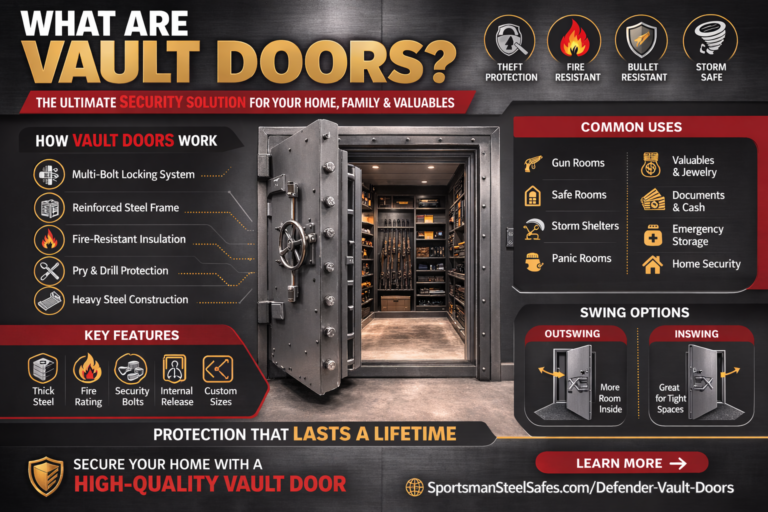
A vault door works by combining multiple security layers into a single reinforced system. While designs vary between manufacturers, most high-quality vault doors include:
Steel Door Construction
Vault doors are built using multiple layers of hardened steel designed to resist:
- Pry attacks
- Drilling
- Grinding
- Cutting tools
- Forced-entry attacks
Higher-end doors often reinforce the center third of the door with additional steel plating because this area contains the most critical locking components and “cut points” targeted during attacks.
Heavy-Duty Locking Bolts
When the lock is activated and the handle turns, multiple steel locking bolts retract simultaneously.
Many premium vault doors use:
- 18-bolt locking systems
- Large-diameter steel bolts
- Multi-directional bolt coverage
These bolts secure the door into the frame on multiple sides, making pry attacks significantly more difficult.
Relockers
Relockers are one of the most important security features inside a vault door.
These spring-loaded devices automatically engage if someone attempts to:
- Drill the lock
- Pry the door
- Attack internal locking components
Once triggered, relockers can permanently secure the door shut until professionally serviced.
Anti-Pry Steel Frame
According to long-time vault installers, the frame is often the single most important security component.
A weak frame can bend under crowbar pressure even if the door itself is thick. High-quality vault doors commonly use:
- 3/4-inch steel anti-pry frames
- Reinforced anchor points
- Deep concrete integration
Thin frames — especially 1/8-inch steel frames found on some cheaper imports — are far more vulnerable to pry-in attacks.
How Does a Vault Door Locking Mechanism Work?
The process is simpler than many people expect.
When the user enters the code or unlocks the mechanism:
- The lock disengages
- The handle rotates
- Internal gear systems retract the steel bolts
- The door swings open
Once closed and locked:
- The bolts extend back into the reinforced frame
- The door becomes mechanically secured on multiple sides
- Relockers remain armed in case of attack
The entire system is designed so force applied to one area distributes across the full structure of the door and frame.
Why the Frame Matters More Than Most Buyers Realize
Many buyers focus only on door thickness, but installers consistently point to the frame as the real weak point in low-quality systems.
A properly engineered vault frame:
- Resists flexing under crowbar pressure
- Prevents pry-bar penetration
- Supports fire sealing systems
- Anchors deeply into concrete walls
Without a reinforced frame, even a thick door can fail under sustained attack.
How Vault Doors Protect Against Fire
Fire protection depends heavily on both insulation materials and sealing design.
Concrete Fire Insulation
High-end vault doors often use concrete-based fire insulation because it provides significantly greater heat resistance than lighter materials.
According to industry professionals, concrete insulation can be roughly four times more fire resistant than many cheaper alternatives used in entry-level doors.
Step Doors and Expanding Fire Gaskets
Premium vault doors also use:
- Step-style door construction
- Multiple expanding fire gaskets
- Layered sealing systems
During a fire:
- Heat causes the gaskets to expand
- The seals close off gaps around the frame
- Smoke and heat penetration are reduced
This layered sealing approach dramatically improves real-world fire performance.
Real-World Break-In Resistance
While most companies keep customer incidents private, real-world attack stories reveal how modern vault doors are engineered to survive determined intrusions.
In one documented attempted break-in:
- Attackers used drills
- Cutting devices
- Crowbars
- Sustained force for nearly an hour
The attack failed because reinforced steel plating in the center section of the door prevented penetration into critical locking areas. Eventually, the attackers abandoned the attempt because entry was taking too long. According to us, none of our vault doors have ever been successfully breached in over 40 years.
What Features Actually Matter When Buying a Vault Door?
Experienced installers recommend focusing on:
Most Important Features
- Thick anti-pry steel frame
- Concrete fire insulation
- American-made locking systems
- Heavy-duty bolt coverage
- Reinforced center steel plating
- Multiple expanding fire gaskets
Overrated Marketing Features
Some homeowners overpay for branding, decorative upgrades, or middleman markups rather than actual security improvements.
According to industry experts, spending more than $10,000 on a residential vault door is often unnecessary when buying factory direct from manufacturers like Sportsman Steel Safes or Pentagon Safes.
Vault Door vs Gun Safe: Which Is Better?
For smaller collections, a traditional gun safe may still make sense.
But for homeowners with:
- 50+ firearms
- Large collections
- Valuable gear
- Long-term storage needs
A walk-in vault room often becomes the more practical investment.
Benefits include:
- More storage space
- Better organization
- Higher fire resistance
- Panic room functionality
- Storm shelter protection
- Room to expand over time
Many homeowners eventually outgrow large gun safes, while a properly built vault room can continue serving multiple purposes for decades.
A Custom Guide Video on How Vault Doors For Homes Looks Like:
Featuring the followings:
- 1/2″ Solid Steel Plate Construction
- Panic Room Interior Handle
- Custom Built for Maximum Security
- Safe Room & Vault Room Ready Professional Installation
Final Thoughts
Vault doors work by combining hardened steel, reinforced anti-pry frames, multi-bolt locking systems, relockers, and advanced fire protection into one integrated security system.
The best vault doors are not defined by flashy marketing or extreme pricing. They are defined by:
- Thick steel construction
- Strong anti-pry frames
- Reliable American-made locks
- Real fire protection
- Proper installation
For homeowners serious about protecting firearms, valuables, and family members, a properly built vault room is no longer just a luxury — it has become one of the smartest long-term security investments available.